Understanding · overactive bladder

Overactive bladder: when the urge to go runs your day

Memorizing every washroom at the mall. Turning down a coffee with friends "just in case". Waking up at night, again. If your bladder makes the decisions for you, there is a name for it: overactive bladder. More importantly, there are things you can do.

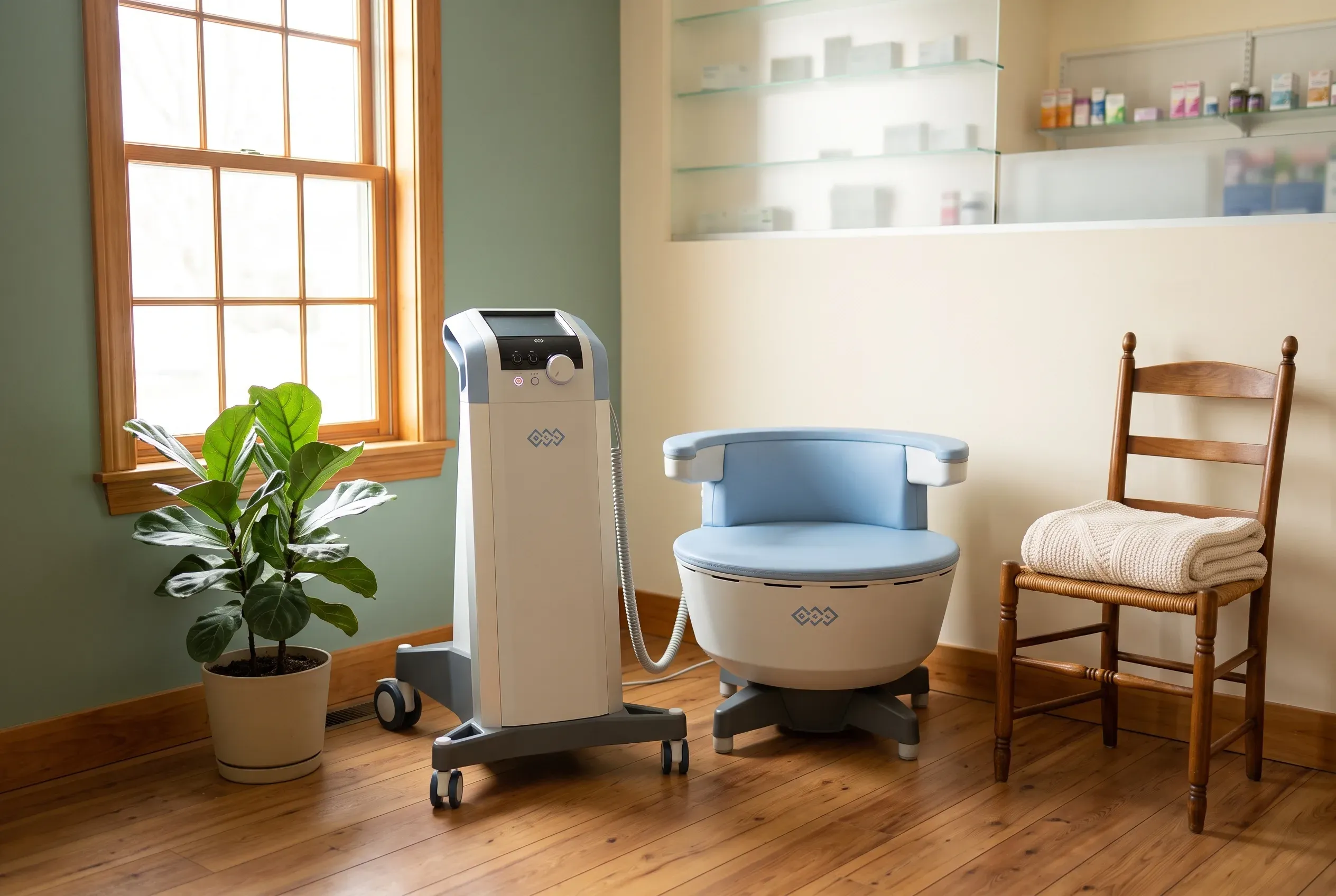
Emsella chair in a warm consultation corner of a Laval pharmacy

Recognizing an overactive bladder

An overactive bladder shows up as a frequent urge to urinate and sudden, hard-to-hold emergencies, sometimes with leaks (that is called urge incontinence). The classic signs:

  • pressing urges that arrive without warning, even on a half-full bladder;
  • urinating more than 8 times a day;
  • waking at night to urinate, often more than once;
  • leaks on the way to the bathroom: the key in the lock, the sound of running water.

Why the bladder acts up

In an overactive bladder, the bladder muscle contracts without permission, before the tank is full. Several things can encourage it: caffeine, alcohol and soft drinks, certain medications, the hormonal changes of menopause, excess weight, repeated urinary tract infections. There is also, paradoxically, the habit of going "just in case", which trains the bladder to sound the alarm earlier and earlier.

The pelvic floor plays a role too: weakened pelvic floor muscles control urges less well and hold back leaks less well when the urge wins.

What actually helps, day to day

  • A bladder diary. For three days, note what you drink and every bathroom visit. It is the number one tool for understanding, and an excellent document to bring to a consultation.
  • Bladder training. Gradually spacing out visits, a few minutes at a time, to teach the bladder to wait again.
  • Cutting back on irritants. Coffee, tea, soft drinks, alcohol: no need to cut everything, just watch what triggers you.
  • Strengthening the pelvic floor. Contracting the pelvic floor as an urge rises helps ride out the wave, and a trained pelvic floor does it better. Our guide to Kegel exercises shows how.

And where does Emsella fit in?

The Emsella chair trains the pelvic floor muscles deeply: the equivalent of about 11,200 contractions in 28 minutes, seated and fully clothed. For an overactive bladder, a more toned pelvic floor can help control urges and reduce the associated leaks. Studies suggest a benefit, but honesty requires saying it plainly: this is not the answer to every overactive bladder, and that is exactly what the partner pharmacy team assesses with you in a free, no-obligation consultation.

Your questions

Your questions about overactive bladder

Does drinking less water fix an overactive bladder?

No. Restricting water often makes things worse, because concentrated urine irritates the bladder. Better to drink normally, spread fluids through the day, and cut back instead on the known irritants: coffee, tea, soft drinks, alcohol.

How many times a day is it "normal" to urinate?

Generally, 4 to 8 times a day is considered typical. Beyond that, especially if the urges are sudden, hard to hold, or wake you at night, it is worth mentioning to a health professional.

Is an overactive bladder just a normal part of aging?

No. It becomes more common with age, but it is neither normal nor inevitable. Most importantly, it is treatable: habits, bladder training, pelvic floor strengthening, medication if needed. There are several levers, often combined.

Can the Emsella chair help an overactive bladder?

It can help, in some cases. Emsella strengthens the pelvic floor muscles, and a more toned pelvic floor helps control urges and reduce the leaks that come with them. It is not a universal fix, though: the free consultation exists precisely to assess whether your situation is a fit.

When should I see a doctor without waiting?

See a doctor promptly if you notice blood in your urine, if urinating becomes painful, if you have a fever, or if symptoms appeared suddenly. These signs can point to an infection or another problem that must be assessed before any pelvic floor work.

Where to start

Take back control, one step at a time.

Bring your bladder diary, or just your questions. The free assessment at the partner pharmacy sorts out what comes down to habits, what comes down to the pelvic floor, and what belongs with your doctor. Discreetly, with no obligation.

The treatment is offered at the site's partner pharmacy, Pharmacie Uniprix Samson, in the heart of Sainte-Dorothée, Laval.

Free consultation · 450 689-5379