What is nocturia?
Nocturia means being woken at night by the need to urinate. Not stopping by the bathroom because you happened to be awake: being pulled out of sleep by the urge. It becomes more common with age, in women and men alike, but "common" does not mean "something to endure": fragmented sleep wears down your health, increases drowsy driving and raises the risk of nighttime falls.
Many causes, and not all of them in the bladder
Nocturia can come from three broad families of causes:
- The body makes too much urine at night (nocturnal polyuria): evening fluids, alcohol or caffeine, fluid pooled in the legs coming back up when you lie down, sleep apnea, certain medications (diuretics), diabetes, heart or kidney conditions.
- The bladder holds less: overactive bladder, reduced capacity, a weakened pelvic floor providing less support.
- In men: a prostate that grows with age can hinder emptying, so the bladder fills up again faster. See our page on the male pelvic floor.
Let's be frank
Pelvic floor strengthening is not the answer to every case of nocturia. If your body produces too much urine at night (sleep apnea, a medication, your heart), no pelvic floor exercise will change that: the cause itself needs treating. That is why the first step is an honest assessment, not a package of sessions.
What you can do starting tonight
- Cut back on fluids in the 2 to 3 hours before bed, especially alcohol and caffeine.
- Put your feet up in the late afternoon so pooled fluid clears before the night.
- Review the timing of your medications with your pharmacist: a diuretic taken in the morning instead of the evening can change your nights. Change nothing without advice.
- Urinate right before bed, without turning it into a double or triple "just in case" visit.
Where the pelvic floor comes in
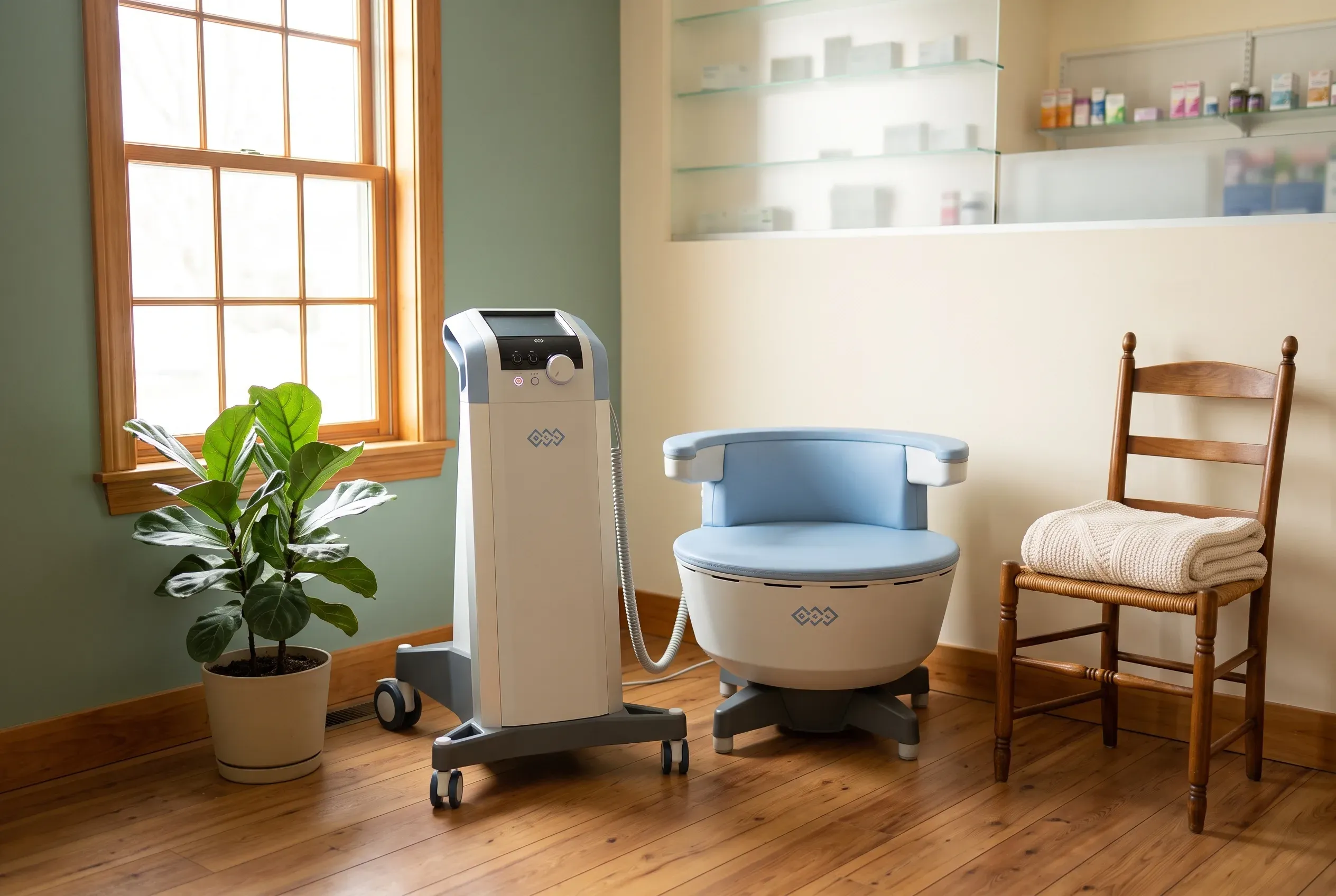
When nocturia is tied to an overactive bladder or a weakened pelvic floor (often the case if you also have daytime leaks or urges), strengthening the pelvic floor can help calm things down. Kegel exercises are the starting point; the Emsella chair, which trains the pelvic floor deeply (28 minutes, seated, fully clothed), can round out the work when the assessment shows the pelvic floor is part of the problem.